Lalita Sahasranama PDF Tamil: A Comprehensive Guide
Exploring the Lalita Sahasranama in Tamil PDF format unveils a sacred journey into the 1000 names of the Divine Mother, readily accessible through platforms like Scribd and temple websites.
These digital resources, such as the document from temple.org, offer the Sri Lalita Sahasranamam text, complete with transliteration and meanings, fostering deeper spiritual connection.
The Lalita Sahasranama, a revered hymn in the Hindu tradition, beautifully encapsulates the glory of the Divine Mother, Lalita Tripura Sundari. This sacred text comprises 1000 names, each a radiant facet of Her infinite power and beauty. Its significance extends deeply into the realms of spirituality and devotion, offering a pathway to liberation and fulfillment.
The increasing availability of the Lalita Sahasranama in Tamil PDF format has democratized access to this powerful practice. Previously confined to traditional learning environments, devotees can now readily download and engage with the text from platforms like Scribd and various temple websites. This accessibility allows for personal study, recitation, and contemplation of the Divine Mother’s attributes.
The Tamil PDF versions often include transliteration, translations, and detailed explanations, making the Sahasranama approachable for a wider audience. This digital format preserves the sanctity of the text while facilitating its widespread dissemination and practice within the Tamil-speaking community and beyond.
The Significance of the Tamil PDF Version
The Tamil PDF version of the Lalita Sahasranama holds immense significance for devotees seeking a deeper connection with the Divine Mother in their native language. It bridges a cultural and linguistic gap, allowing for a more intimate and accessible experience of this sacred hymn.
Accessibility is paramount; platforms like Scribd and temple websites (such as temple.org) provide readily available digital copies, removing geographical and logistical barriers to practice. This ease of access fosters wider participation in the recitation and study of the Sahasranama.
Furthermore, the Tamil PDF often includes detailed meanings and transliterations, aiding in correct pronunciation and comprehension. This is particularly valuable for those unfamiliar with Sanskrit. The preservation of the text in its Tamil form ensures its continued relevance and transmission to future generations, strengthening the devotional lineage.
Historical Background of Lalita Sahasranama
The Lalita Sahasranama’s origins are deeply rooted in Hindu tradition, believed to be a part of the Brahmanda Purana. While the exact dating remains debated, its textual form likely solidified between the 7th and 13th centuries CE. The hymn is traditionally attributed to Sage Agastya, who received it directly from Hayagriva, an avatar of Vishnu.
The text’s journey to Tamil-speaking regions involved translation and adaptation, ensuring its accessibility to a wider audience. The availability of the Lalita Sahasranama in Tamil PDF format represents a continuation of this historical transmission, preserving the stotram for contemporary devotees.
Digital platforms like Scribd and temple resources demonstrate a modern chapter in this history, facilitating the widespread dissemination of the text. This ensures the continued practice and reverence for the Divine Mother’s 1000 names across generations.
Understanding the Structure of the Sahasranama
The Lalita Sahasranama isn’t a random list; it’s meticulously structured. The 1000 names are organized into five sections, or pancakas, each with a specific focus. These sections progressively reveal the Divine Mother’s nature, starting with her form, then her powers (Shaktis), her cosmic manifestation, and culminating in her grace and blessings.
Tamil PDF versions often maintain this structure, aiding comprehension. The names aren’t simply descriptive; they’re potent mantras, each resonating with specific energies. Understanding this framework enhances the recitation experience, allowing devotees to connect with the deeper meaning behind each name.
Resources like those found on temple websites and Scribd often present the names sequentially, following the traditional order. This structured approach is vital for a complete and meaningful engagement with the Sahasranama.
The 1000 Names: A Categorical Overview
The Lalita Sahasranama’s 1000 names fall into distinct categories, revealing the multifaceted nature of the Divine Mother. These categories, readily apparent in Tamil PDF texts, provide a roadmap for understanding her attributes. Names relating to her form describe her physical appearance and adornments – radiant complexion, beautiful eyes, and jeweled decorations, as seen in the examples from temple.org.
Names describing her powers (Shaktis) highlight her dynamic energies and abilities, like creation, preservation, and destruction. Those reflecting her cosmic nature reveal her as the universe itself, encompassing all existence.
Tamil PDFs often present these names sequentially, allowing devotees to appreciate the progression and interconnectedness of these divine qualities. Studying these categories deepens understanding and enhances the power of recitation.
Names Related to Divine Mother’s Form
Within the Lalita Sahasranama, numerous names beautifully depict the Divine Mother’s exquisite form. Tamil PDF versions, like the one available on temple.org, showcase descriptions of her radiant complexion – often described as “aruna” (reddish hue) – and captivating eyes, likened to jewels. These names detail her adornments: a crescent moon crown, a garland of flowers, and jeweled ornaments adorning her limbs.
Specific names highlight her graceful posture, seated on a lotus throne, and her charming smile. The text emphasizes her attire, often a silk garment, and her hands holding auspicious objects. These descriptions aren’t merely aesthetic; they symbolize her perfection and divine beauty, accessible through careful study of the Tamil text.
Names Describing Her Powers (Shaktis)
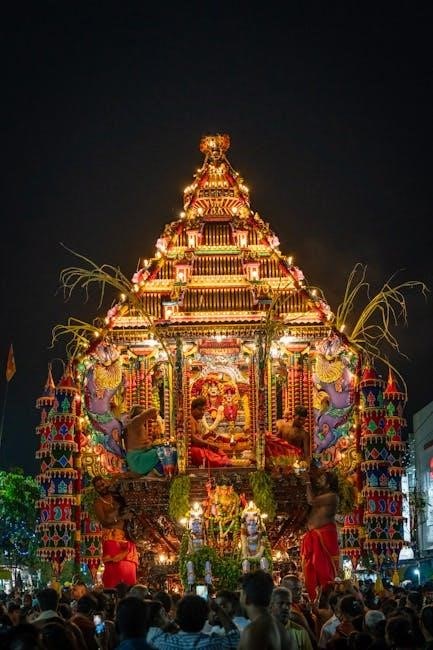
The Lalita Sahasranama, particularly in its Tamil PDF format, dedicates a significant portion to names revealing the Divine Mother’s potent energies, or Shaktis. These names, found in resources like Scribd’s offerings, aren’t simply attributes but active forces shaping the universe. Terms like “Shakti” itself, and descriptions of her ability to create, preserve, and destroy, are prominent.
Names illustrate her control over the elements, her mastery of mantras, and her power to grant boons. The Tamil text details her as the source of all knowledge and the dispeller of ignorance. Studying these names unveils her capacity to overcome obstacles and bestow liberation. Understanding these Shaktis, as presented in the PDF, is key to unlocking the Sahasranama’s transformative potential.
Names Reflecting Her Cosmic Nature
Within the Lalita Sahasranama’s Tamil PDF versions, a compelling section details names that reveal the Divine Mother’s expansive cosmic nature. These aren’t limited to a personal deity but encompass the entirety of existence, mirroring the universe itself. Resources like those found on temple websites and Scribd showcase names associating her with the cosmos, the cycles of creation, and the fundamental energies governing reality.
Descriptions portray her as the embodiment of time, space, and causality. The Tamil text highlights her presence in every atom and every galaxy. These names emphasize her role as the ultimate reality, beyond human comprehension. Studying these cosmic aspects, as presented in the PDF, fosters a sense of interconnectedness and reveals the divine within all things.
Benefits of Reciting Lalita Sahasranama
Reciting the Lalita Sahasranama, particularly utilizing Tamil PDF resources readily available online, is believed to bestow profound benefits. Devotees report experiencing increased peace, clarity, and spiritual growth. The consistent chanting of these 1000 names is thought to remove obstacles, alleviate suffering, and attract positive energies into one’s life.
Accessing the text through platforms like Scribd or temple websites allows for convenient and regular practice. Benefits extend to improved mental focus, emotional balance, and a deeper connection with the Divine Feminine. Many believe it enhances intuition and unlocks hidden potential. The Tamil PDF versions, with their meanings, facilitate a more meaningful and transformative recitation experience, fostering inner harmony and well-being.

Finding Authentic Tamil PDF Resources
Locating authentic Tamil PDF versions of the Lalita Sahasranama requires careful consideration. Several online platforms offer access, but verifying the source’s reliability is crucial. Scribd (Sri Lalitha Sahasranamam PDF) hosts numerous versions, though user contributions necessitate discernment.
Temple websites, like that of the Boston Sri Lakshmi Temple (SREE LALITA SAHASRA NAMAVALI – TAMIL), often provide trustworthy PDFs directly from traditional sources. When downloading, prioritize resources from established religious institutions or respected scholars. Always cross-reference with known translations to ensure accuracy and avoid corrupted or inaccurate texts. Careful selection guarantees a genuine and spiritually enriching experience.
Scribd as a Source for Lalita Sahasranama PDF
Scribd presents a vast repository of user-uploaded documents, including multiple versions of the Lalita Sahasranama in Tamil PDF format. (Sri Lalitha Sahasranamam PDF). However, due to its open-source nature, caution is advised. While convenient, the accuracy and authenticity of these PDFs can vary significantly.

Users have shared texts like “Lalitha Sahasranama With Meaning in Tamil Sri Santhanam PDF,” achieving a 100% rating from a limited number of reviewers. It’s essential to compare different versions and cross-reference with established translations. Scribd serves as a starting point, but independent verification with reliable sources—like temple websites—is crucial for ensuring a correct and spiritually sound Lalita Sahasranama experience.

Temple Websites Offering the Tamil Text
Several Hindu temple websites provide authentic Lalita Sahasranama texts in Tamil PDF format, offering a more reliable source than user-generated platforms. For instance, the Boston Sri Lakshmi Temple (SREE LALITA SAHASRA NAMAVALI – TAMIL) hosts a downloadable PDF of the Sree Lalita Sahasra Namavali.
These temple-provided resources are typically vetted by knowledgeable priests and scholars, ensuring accuracy in transliteration and meaning. The document from the Boston temple, published September 24, 2019, includes the Sahasranama verses with accompanying Tamil script. Utilizing these official sources guarantees a more faithful and spiritually enriching experience when engaging with this powerful hymn, minimizing the risk of errors found elsewhere.
Decoding the Tamil Script and Pronunciation
Successfully reciting the Lalita Sahasranama in Tamil requires understanding the script and correct pronunciation. Tamil utilizes a unique script distinct from Devanagari, necessitating familiarity with its characters and phonetic values. The PDF versions available often present the names in Tamil script alongside transliterations, aiding in learning.
Pay close attention to the vowel sounds and consonant combinations, as subtle differences can alter the meaning. Resources focusing on Tamil phonetics can be invaluable. Proper pronunciation is crucial, as the power of the mantra lies within the sound vibrations. Online audio recitations, alongside the PDF text, can significantly improve accuracy and deepen the meditative experience. Consistent practice is key to mastering the nuances of Tamil pronunciation.
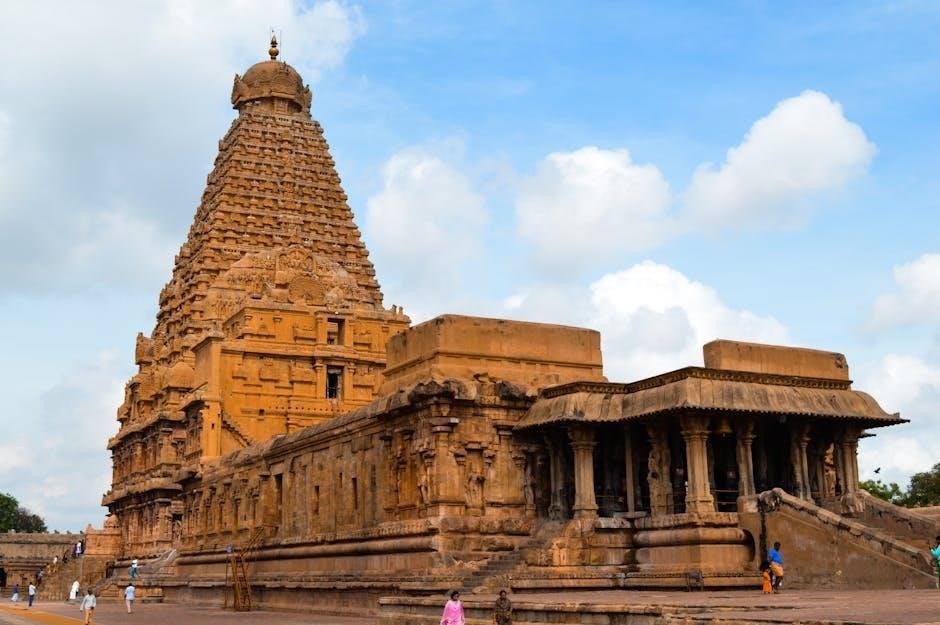
Lalita Sahasranama with Meaning in Tamil
The Tamil PDF versions of the Lalita Sahasranama frequently include detailed meanings alongside each of the 1000 names. These translations unlock a deeper understanding of the Divine Mother’s attributes and cosmic significance. Resources like the one found on Scribd, “Lalitha Sahasranama With Meaning in Tamil Sri Santhanam PDF,” provide comprehensive explanations.
Understanding the meaning behind each name transforms recitation from a mere repetition of sounds into a profound meditative practice. The interpretations often draw from Tantric philosophy and Hindu scriptures, revealing layers of symbolism. Studying these meanings enhances devotion and allows for a more intimate connection with the Goddess. Careful examination of the Tamil text alongside its English translation is highly recommended for a complete experience.
Different Schools of Interpretation
The Lalita Sahasranama, even within the Tamil tradition, isn’t subject to a single, monolithic interpretation. Various schools of thought – stemming from differing Tantric lineages and philosophical perspectives – offer nuanced understandings of the 1000 names. While the core essence remains consistent, the emphasis and specific meanings attributed to certain names can vary.
Some interpretations prioritize the Shakta Tantric tradition, focusing on the Goddess’s dynamic energy and power. Others lean towards Advaita Vedanta, viewing the names as pointing towards the ultimate non-dual reality. Examining different commentaries, often found accompanying PDF versions, reveals these diverse perspectives. Recognizing these schools enriches one’s appreciation of the Sahasranama’s depth and complexity, fostering a more holistic understanding.
Practical Guide to Recitation
Embarking on Lalita Sahasranama recitation, even utilizing a Tamil PDF, requires mindful preparation. Begin with a clean space and a purified mind, perhaps through a brief meditation. While specific rituals aren’t mandatory, offering flowers or incense can enhance the devotional atmosphere. Consistency is key; daily recitation, even of a few names, is more beneficial than sporadic, lengthy sessions.
The timing is also significant. Dawn and dusk are considered auspicious. Utilizing a PDF with clear transliteration aids accurate pronunciation, crucial for invoking the names’ power; Many recommend reciting with devotion and understanding the meaning, rather than simply rote memorization. Regular practice, guided by authentic resources, deepens the connection with the Divine Mother.
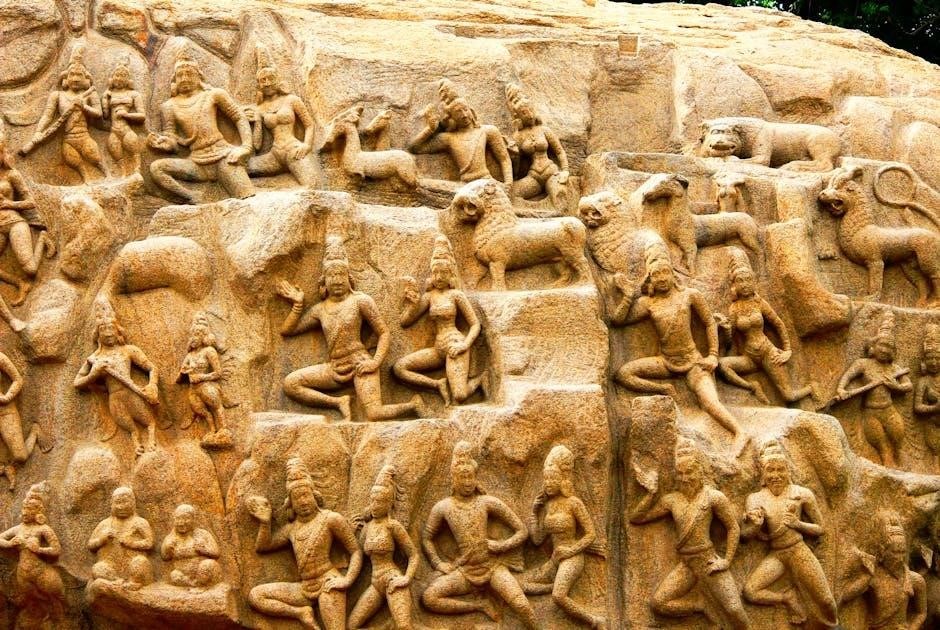
Preparation and Rituals
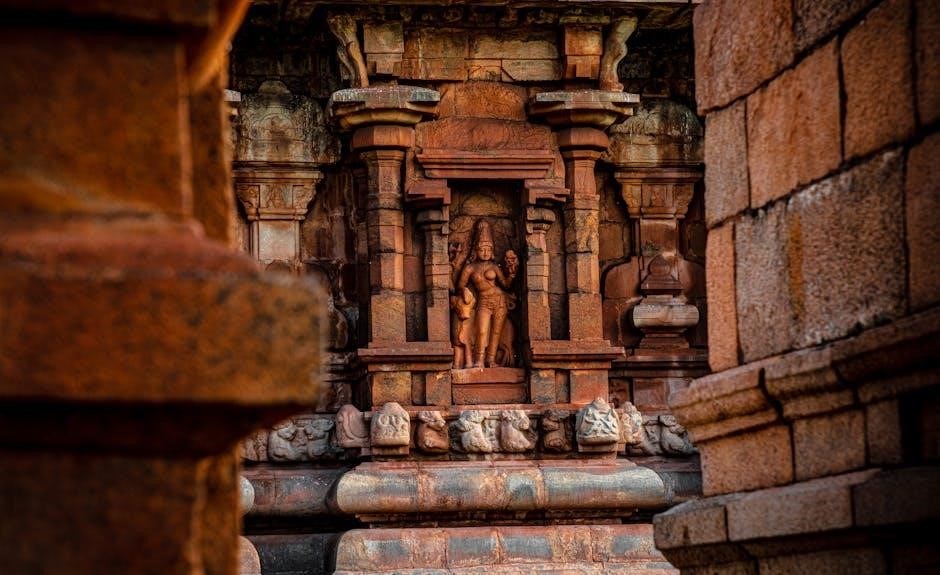
Prior to reciting the Lalita Sahasranama, even when using a Tamil PDF version, creating a sacred atmosphere is beneficial. This doesn’t necessitate elaborate rituals, but a clean and quiet space is essential. A simple offering of flowers, incense, or a lit lamp can symbolize reverence. Personal hygiene, including a bath, is traditionally recommended, signifying purification of body and mind.
Mentally preparing involves setting a clear intention for the recitation – seeking blessings, overcoming obstacles, or simply expressing devotion. Some practitioners visualize the Divine Mother during the process. Having the Tamil PDF readily available, along with any accompanying translations or commentaries, streamlines the practice. A calm and focused mindset enhances the experience, fostering a deeper connection with the divine energy.

Frequency and Timing of Recitation
The frequency of Lalita Sahasranama recitation, even utilizing a convenient Tamil PDF, is deeply personal. Daily recitation is considered highly auspicious, but even weekly or monthly practice yields benefits. Many devotees choose to recite during specific times aligned with cosmic energies. Dawn and dusk are particularly potent, symbolizing the transition between darkness and light.
Certain days, like Fridays (associated with the Divine Mother) and during Navaratri, are considered especially favorable. The full moon is also a powerful time for spiritual practice. Consistency is key; even a shorter, regular recitation is more effective than infrequent, lengthy sessions. Utilizing the Tamil PDF allows for flexibility, enabling practice at one’s own pace and schedule, fitting seamlessly into daily life.
Common Misconceptions and Clarifications
Several misconceptions surround the Lalita Sahasranama, even when accessed through a Tamil PDF. One common belief is that perfect pronunciation is essential; however, sincere devotion is paramount. While accurate pronunciation aids understanding, the intention behind the recitation holds greater significance. Another misconception is that only Brahmins can recite it – this is untrue; the Sahasranama is open to all sincere seekers.
Some believe a specific ritual is mandatory, but a simple, clean space and focused mind suffice. The Tamil PDF versions often include detailed meanings, but understanding every nuance isn’t crucial initially. Focus on feeling the energy of the names. Finally, it’s not a ‘magic spell’ but a powerful tool for self-transformation and connecting with the Divine Feminine.
Advanced Study and Resources
For those seeking deeper understanding, beyond the basic Tamil PDF, several resources exist. Studying commentaries by respected scholars illuminates the symbolism within each name. Exploring texts like the Lalita Trishati and Soundarya Lahari provides context and expands knowledge. Online forums and communities dedicated to Sri Vidya offer discussions and insights.
Advanced practitioners often benefit from guidance from a qualified Guru; While PDFs like those found on Scribd and temple websites are excellent starting points, they represent only the surface. Delving into the Tantric roots and philosophical underpinnings requires dedicated study. Consider exploring resources on Shakti Peethas and the associated traditions to enrich your practice.
The Role of a Guru in Lalita Sahasranama Practice
While Tamil PDF resources like those available on Scribd and temple websites provide the textual foundation, a Guru’s guidance is invaluable for authentic practice. The Lalita Sahasranama is deeply rooted in Tantric tradition, requiring initiation and proper understanding to avoid misinterpretations.
A Guru transmits Shakti and clarifies subtle nuances within the names, unlocking their full potential. They personalize the practice, tailoring it to the individual’s spiritual needs and removing obstacles. Direct instruction ensures correct pronunciation and meditative techniques. Relying solely on PDFs can lead to superficial understanding; a Guru provides the experiential dimension, fostering genuine transformation and a profound connection to the Divine Mother;
Embracing the Divine Feminine
The journey through the Lalita Sahasranama, even facilitated by accessible Tamil PDF versions from sources like Scribd and temple websites, ultimately leads to embracing the Divine Feminine – Shakti – in all its glory. This isn’t merely an intellectual exercise of memorizing 1000 names, but a profound spiritual awakening.
Recitation, with understanding gleaned from these resources, dissolves ego and cultivates devotion. It’s a pathway to realizing the inherent divinity within oneself and the universe. The Sahasranama unveils the Mother’s boundless compassion, power, and wisdom, inviting us into a loving relationship with the source of creation; Through consistent practice, we align with Her energy, fostering peace, prosperity, and liberation.